Helping people facing employment barriers get a second chance, putting more skilled workers on construction sites, and building much-needed housing across Northern Ontario are the goals driving Community Builders.
The Barrie-based organization is marking its 10th anniversary with its sights set on further geographical expansion.
The construction-based social enterprise, which began in Barrie before expanding to Muskoka, Sudbury and, most recently, Sault Ste. Marie, is already hearing from other Northern communities who want the program there.
Timmins and Thunder Bay are among the communities that have reached out to the organization about bringing its model to their regions, said executive director Carly Gasparini.
“They can see that it works, and it truly does work,” Gasparini said. “It’s a really smart way to do what we’re trying to do from a nonprofit perspective.”
Gasparini joined Community Builders in 2021 when the organization opened its second office in Sudbury. Initially, the plan was for her to help set up the Sudbury operation before eventually separating it from the Barrie organization.
However, that plan changed as she and co-founder and CEO Brandon Day saw the potential in working together.
Community Builders combines the social mission of a non-profit with the business operations of a construction company.
For Gasparini, who had worked in the non-profit sector in Manitoba before joining Community Builders, the social-enterprise model changed the way she viewed what a non-profit organization could do.
“Being able to use those good, strong business skills and business techniques, and being able to use that for good … kind of opened up this new world of non-profit for me,” she said.
The success of the Sudbury operation was a turning point.
Once the organization saw that it could replicate its model and significantly increase the number of people it served, expansion began to look less like an experiment and more like a strategy. Then, communities in Muskoka and Sault Ste. Marie reached out, leading to further expansion.
Gasparini is quick to point out that the approach isn’t simply to copy and paste the Sudbury operation into another community. Community Builders looks for local champions who understand their communities and can build relationships with employers, construction companies and other organizations.
“The landscape looks different in each community,” Gasparini said. “We know that a community isn’t particularly interested in having someone from down south come and tell them how to do this thing right.”
Each location has its own managing director, construction manager, and programming staff. The overall training curriculum is consistent, but local partnerships and construction projects vary depending on the community.
That local approach is particularly important when it comes to finding enough work for trainees.
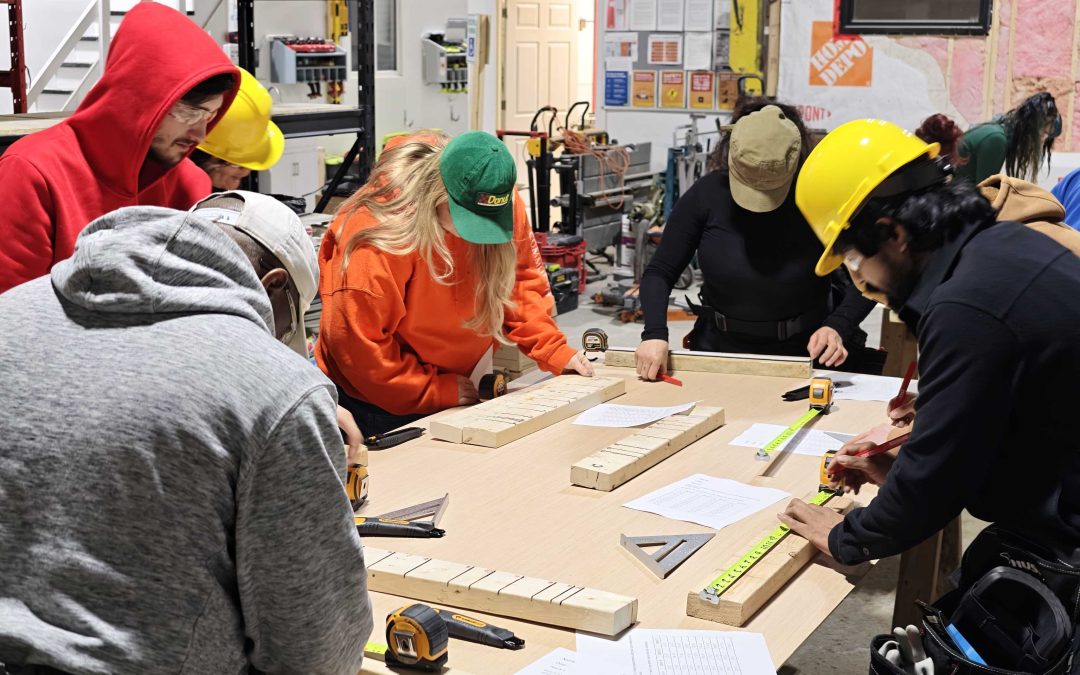
Although they receive far more applications than they can manage, Community Builders typically takes 12 trainees at a time, meaning the organization needs a steady stream of construction projects to provide hands-on experience in keeping its professional crews working.
When traditional construction jobs aren’t available, trainees can work on projects for community organizations that have materials or projects lined up but can’t afford the labour.
At the same time, the organization works with private-sector construction companies that can hire graduates once they complete the program.
“The response from the private sector has been just incredible,” Gasparini said. “They truly see the value of what we’re doing here, mainly because they come back and they hire our grads all the time.”
Participants come from a wide range of backgrounds, including people with criminal records, newcomers to Canada, people returning to the workforce and those who have struggled with addiction or other barriers to employment.
The program is designed not only to teach construction skills, but also the practical skills needed to stay employed, from workplace behaviour and conflict management to budgeting and nutrition, said Gasparini.
As Community Builders enters its second decade, Gasparini sees particular potential for the model in Northern Ontario, where communities are grappling with housing needs and skilled-labour shortages. Most graduates, she said, remain in the communities where they trained, helping strengthen the local workforce.
“The skill trade deficit in the North is far higher than in southern Ontario, too, because we just don’t have the number of people here,” Gasparini said. “So it’s important to us that we’re building up that Northern Ontario workforce.
Original Reporting: